
Proven: How the ATR Indicator Reveals Hidden Market Volatility Secrets

There is an indicator sitting on your chart right now that most traders glance at and ignore completely. It is not glamorous. It does not give you buy or sell signals. It does not predict where the market is going. And yet, the traders who truly understand what the ATR indicator reveals about hidden market volatility use it as one of their most powerful trading tools — every single day.
I am talking about the ATR indicator — the Average True Range. Developed by J. Welles Wilder Jr. in 1978, the same year he gave us the RSI, the ATR indicator is one of the most underused yet practically powerful tools in technical analysis. In this post, I want to show you exactly what the ATR indicator reveals, how I personally use it, and why it belongs in every serious trader's framework.
What the ATR Indicator Actually Measures — And What It Does Not
The ATR indicator measures one thing with precision: Volatility. Specifically, it measures the average range of price movement over a defined period — typically 14 bars — accounting for both intraday moves and gap movements between sessions.
The ATR indicator does this by first calculating the True Range for each period. The True Range is the largest of three values: Current High minus Current Low; the absolute distance from the current high to the previous session's close; and the absolute distance from the current low to the previous session's close. By including the previous close, the ATR indicator captures the gap movements that a simple high-low range entirely misses.
What the ATR indicator does not do is tell you direction. The ATR indicator is a pure volatility compass — it tells you how energetic the market currently is, not where it is headed. Think of it like a weather barometer: a barometer cannot tell you whether tomorrow will be sunny or rainy, but it tells you how much atmospheric energy is building — which tells you how much to prepare. The ATR indicator does the same for market energy.
Hidden Secret #1: The ATR Indicator Makes Your Stop-Losses Smarter
This is the most proven application of the ATR indicator and the one that changed my trading most profoundly. Before I integrated the ATR indicator into my stop-loss framework, I used arbitrary levels — round numbers, chart support, or a fixed percentage. The problem was predictable: market noise would frequently touch my stop, exit me from a valid trade, and then reverse in my original direction.
The ATR indicator solves this by calibrating your stop-loss to the instrument's actual volatility. If a stock has an ATR indicator reading of ₹40, placing a stop ₹10 away from your entry means you are exiting on routine noise — not on a genuine reversal signal. Placing the stop at 1.5x ATR indicator (₹60) or 2x ATR indicator (₹80) gives the trade breathing room proportional to what the market actually moves.
My standard ATR indicator stop-loss rule for swing trades: 1.5x the ATR indicator value below entry for long trades. For positional trades: 2x ATR indicator. For high-volatility conditions when the ATR indicator is elevated above its 6-month average: I extend to 2.5x and reduce my position size proportionally.
Hidden Secret #2: The ATR Indicator Powers Intelligent Position Sizing
This is where the ATR indicator becomes genuinely sophisticated. Volatility-normalised position sizing — using the ATR indicator to determine how many shares to trade — ensures that you risk the same rupee amount regardless of which instrument you are trading and regardless of how volatile it currently is.
The formula: Position Size = (Capital × Risk Percentage) ÷ (ATR Indicator Value × Stop Multiplier).
Example using real numbers: ₹10 lakh capital, 1% risk per trade (₹10,000), ATR indicator reading of ₹60, and a 2x ATR indicator stop. Position Size = ₹10,000 ÷ (₹60 × 2) = ₹10,000 ÷ ₹120 = 83 shares. Now do the same calculation for a stock with an ATR indicator of ₹120 and you get 41 shares — half the quantity, same rupee risk. The ATR indicator automatically adjusts your position size for the instrument's volatility. This is exactly how professional traders and systematic funds manage their portfolio risk.
Hidden Secret #3: ATR Indicator Contraction Predicts Explosive Breakouts
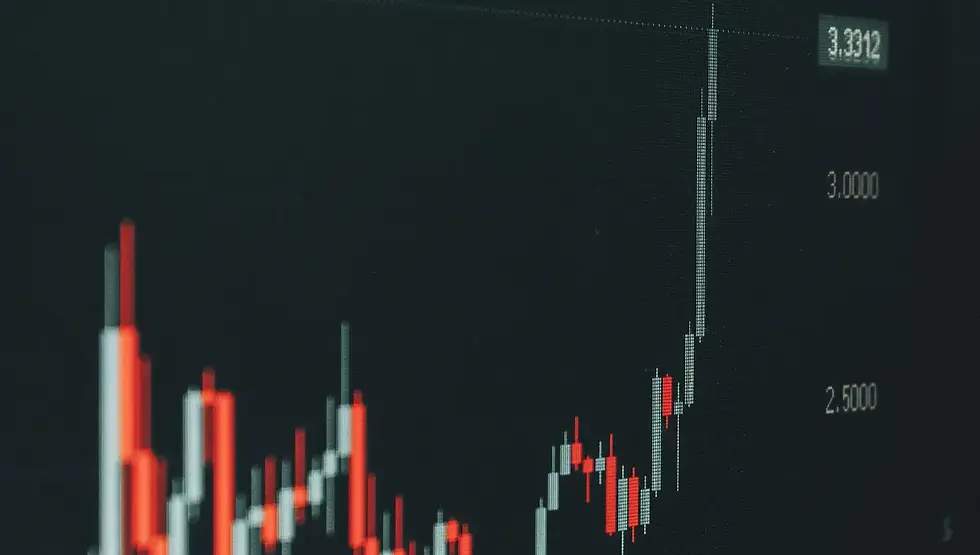
One of the most powerful hidden insights the ATR indicator reveals is the precursor to major price breakouts. When the ATR indicator declines to a multi-week or multi-month low, it signals that price is compressing — energy is building inside a narrowing range. Professional traders call this 'volatility contraction.'
The pattern I watch for: ATR indicator declines steadily over 3–4 weeks, price compresses into a tight band with declining volume, and then — the ATR indicator begins expanding sharply as price breaks out of the range. That ATR indicator expansion is the confirmation that the breakout has genuine momentum behind it, not just a false move that will immediately reverse.
Some of my best trades over the years have come from setups where I noticed unusual ATR indicator compression, waited patiently for the range to resolve, and entered the breakout with position size confirmation from the ATR indicator expansion. This is a hidden secret the ATR indicator reveals that most traders completely miss.
Using the ATR Indicator in the Indian Market Context
For Indian traders, the ATR indicator takes on additional relevance given the specific volatility characteristics of our markets. Bank Nifty, for instance, regularly experiences ATR indicator readings of 400–600 points on standard sessions — but on RBI policy announcement days or major global macro events, that ATR indicator can spike to 1,200–1,800 points.
When I see the ATR indicator running at 2–3x its historical average on a particular day or week, it is a direct signal to reduce my position size proportionally. The ATR indicator is telling me the market is in an unusual volatility regime — one where my normal stop levels may be touched by noise before the trade has a chance to develop.
Checking the ATR indicator against its 6-month historical average before every trade is now a non-negotiable step in my pre-trade routine. If the current ATR indicator is significantly above average: smaller size. If it is at or below average: normal sizing. This single ATR indicator discipline has saved me from multiple oversized losses during market stress events.
Final Thought: Volatility Is Information — The ATR Indicator Quantifies It
Most traders treat market volatility as an obstacle — something that stops them out and creates chaos. I treat it as information. And the ATR indicator is the tool that transforms that raw information into actionable trading intelligence.
Start by simply reading the ATR indicator daily for your primary trading instruments. Compare it to recent history. You will begin to see patterns — and those patterns, used through the proven ATR indicator applications I have shared above, will make your stop placement and position sizing measurably more intelligent, one trade at a time.
If this post on ATR indicator has sparked questions about your own trading — whether it is about building a plan, fixing a recurring mistake, or simply getting clarity on your next step — I invite you to speak with me directly. In my 1-on-1 consultancy sessions, we work through your specific situation, your strategy, and your challenges together. You do not need to figure it all out alone.
Frequently Asked Questions: ATR Indicator
What does the ATR indicator measure?
The ATR indicator (Average True Range) measures the average range of price movement over a specified period — typically 14 bars. It tells you how much an instrument moves on average per session, capturing both intraday range and gap movements. The ATR indicator measures volatility, not direction.
Why is the ATR indicator better than a simple high-low range for measuring volatility?
A simple high-low range misses gap movements between sessions. The ATR indicator solves this by measuring the True Range — the largest of: current high minus current low, current high minus previous close, or current low minus previous close. This makes the ATR indicator more accurate in capturing the full volatility experienced by a trader.
How do I use the ATR indicator for stop-loss placement?
Multiply the current ATR indicator reading by a factor (1.5x for normal swing trades, 2x for positional trades) and place your stop-loss that distance from your entry price. This ATR indicator-based stop accounts for normal market noise, reducing the chance of being stopped out by routine volatility rather than a genuine reversal.
Can the ATR indicator predict the direction of the next price move?
No. The ATR indicator is a pure volatility measure with no directional bias. It tells you how much price may move, not where it will move. Always combine the ATR indicator with directional analysis — price action, trend structure, or other indicators — for trade decisions.
What is a 'good' ATR indicator value for a stock?
There is no universally good or bad ATR indicator value. The ATR indicator reading is only meaningful relative to the instrument's own historical average. Compare the current ATR indicator reading to the 6-month average ATR for that stock. If current ATR is significantly above average, volatility is elevated and position sizes should be reduced accordingly.
How do I use the ATR indicator for position sizing?
Use this formula: Position Size = (Capital × Risk %) ÷ (ATR indicator value × Stop Multiplier). For example: ₹10L capital, 1% risk (₹10,000), ATR indicator = ₹50, 2x stop multiplier = 100 shares. This ensures your risk per trade is consistent regardless of how volatile the instrument is.
What does it mean when the ATR indicator is declining?
A declining ATR indicator signals that price is contracting into a tighter range — volatility is compressing. This is often a precursor to a significant breakout in either direction. A declining ATR indicator followed by a sharp ATR expansion typically signals the beginning of a strong directional move.
Is the ATR indicator useful for index options trading in India?
Very much so. The ATR indicator for Bank Nifty and Nifty 50 helps options traders assess whether the implied move priced into options is reasonable relative to recent actual volatility (as measured by the ATR indicator). It also helps set realistic targets and stops for options positions based on what the underlying index typically moves per session.
What period setting should I use for the ATR indicator?
The default 14-period ATR indicator is widely used across all asset classes and timeframes and provides a good balance between responsiveness and smoothness. For shorter-term intraday trading, a 7 or 10-period ATR indicator responds more quickly to recent volatility. For positional trading, a 20 or 21-period ATR indicator provides a more stable, less reactive reading.
On which Indian platforms is the ATR indicator available?
The ATR indicator is available on all major Indian trading and charting platforms including Definedge TradePoint, Zerodha Kite (via TradingView charts), Upstox, AngelOne, and standalone TradingView. It is typically found under the 'Volatility Indicators' or 'Wilder Indicators' section of the indicator library.
The ATR indicator was created by J. Welles Wilder Jr. and introduced in his landmark 1978 publication 'New Concepts in Technical Trading Systems' — arguably one of the most consequential books in the history of technical analysis. In the same volume, Wilder presented the Relative Strength Index (RSI), the Parabolic SAR, and the Average Directional Index (ADX). The ATR indicator arose from a specific practical problem Wilder observed in commodity futures markets: that standard price range calculations significantly underestimated actual market volatility by ignoring the gaps that commonly occurred between trading sessions. By incorporating the previous session's closing price into the True Range calculation, the ATR indicator produced a far more accurate picture of the volatility a trader would actually experience in live markets.
The ATR indicator gained its most famous systematic application through the Turtle Trading experiment of 1983, conducted by commodity trader Richard Dennis and his partner William Eckhardt. The Turtles — a group of traders with no prior experience, trained to trade Dennis's systematic approach — used a version of the ATR indicator (which they called 'N') as the cornerstone of their position sizing algorithm. By risking a fixed dollar amount per ATR indicator unit across a diversified portfolio of commodity markets, the Turtle system achieved consistent risk normalisation regardless of market or volatility environment. The Turtle Trading experiment demonstrated conclusively that the ATR indicator, used systematically, could form the basis of a robust, replicable trading methodology.
In modern markets, the ATR indicator has found applications far beyond its original commodity futures context. Equity traders use the ATR indicator for stop-loss calibration and position sizing. Options traders use it to assess whether implied volatility is high or low relative to actual recent volatility as measured by the ATR indicator. Algorithmic trading systems use ATR indicator thresholds to dynamically adjust position sizes, trigger risk-reduction protocols, and identify volatility regime changes.
For Indian retail traders, the ATR indicator is particularly valuable given the dramatic intraday and inter-session volatility that characterises Indian equity markets — especially in the derivatives segment. Bank Nifty and Nifty 50 options trading, which has grown exponentially among Indian retail participants, creates an environment where understanding the ATR indicator reading relative to historical norms is essential for appropriate position sizing. Indian traders who integrate the ATR indicator into their stop-loss and sizing framework gain a quantitative discipline that significantly reduces the risk of overexposure during high-volatility events such as RBI monetary policy announcements, Union Budget sessions, and major global macro shocks that frequently create ATR indicator spikes of 2–3x the historical average.



Comments