
Stop Suffering Through Trading Drawdowns: Proven Survival Secrets Revealed

Let me tell you something that took me years to fully accept: a trading drawdown is not the enemy. Your reaction to it is.
In more than a decade of full-time trading, I have been through trading drawdowns that lasted days, and others that stretched across months. Each one tested me differently — not just financially, but psychologically, methodologically, and personally. And each one taught me something the market cannot teach you in a winning streak.
In this post, I want to share the proven survival secrets I have learned, refined, and depend on every time a trading drawdown arrives at my door — because it always does. For every trader, beginner or experienced, a drawdown is not a question of if. It is always a question of when and how prepared you are.
What Is a Trading Drawdown and Why Does It Feel So Personal?
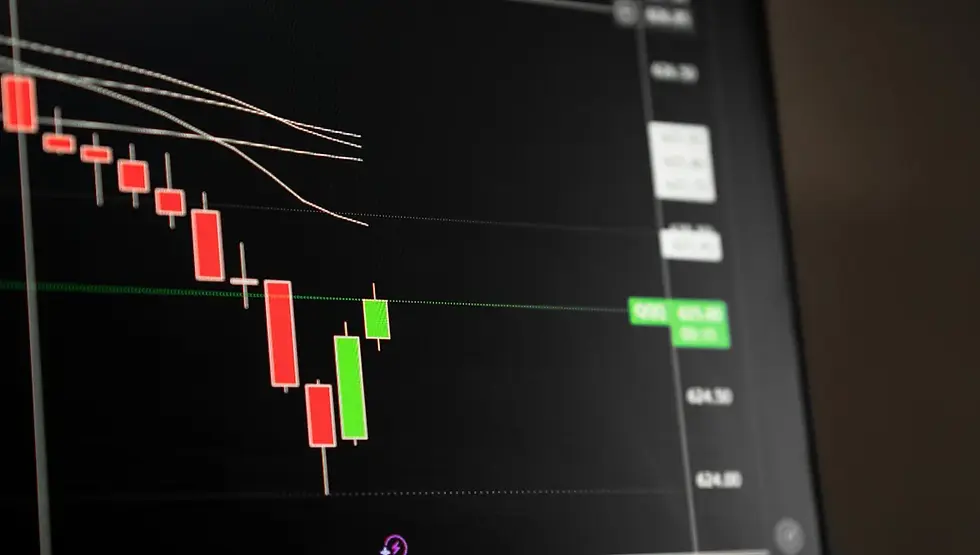
A trading drawdown is the percentage decline in your portfolio's value from its most recent peak to its current level. If your account hit ₹12 lakhs last month and now sits at ₹9 lakhs, you are in a 25% trading drawdown. Simple arithmetic. But nothing about living through it feels simple.
The reason a trading drawdown feels so personal is that most retail traders unconsciously link their account value to their self-worth. When the number goes down, they feel like they are going down. That emotional entanglement is the real danger — not the loss itself.
I remind myself regularly: a trading drawdown is a business expense. Every business model has periods of negative cash flow. The traders who survive long-term are those who respond to a drawdown as a business problem requiring a solution — not as a personal failure requiring punishment.
Proven Secret #1: Define Your Drawdown Limits Before You Need Them
The single most powerful thing you can do to survive a trading drawdown is to decide in advance exactly how much you are willing to lose before stepping back and re-evaluating. I call this your drawdown circuit-breaker.
Mine is a 20% portfolio drawdown. If my account falls 20% from its recent peak, I automatically reduce all positions to half-size and conduct a full system review before resuming normal trading. This rule was written into my trading plan years ago — not during a trading drawdown, when emotions are running high.
If you set your drawdown limits during a loss phase, fear will set them too tightly. If you set them during a winning phase, overconfidence will set them too loosely.
Write them when markets are quiet and your mind is clear.
Proven Secret #2: The Counter-Intuitive Position Size Response
Reduce — Never Increase
When traders experience a trading drawdown, the instinct is to trade bigger to recover faster. This instinct is both natural and extremely dangerous. A larger position size during a trading drawdown means each subsequent loss cuts deeper — accelerating the drawdown rather than reversing it.
My rule is the opposite: when I enter a confirmed trading drawdown, I immediately cut my position size to 50% of normal. This does two things simultaneously. First, it limits further damage. Second, it reduces the psychological pressure enough for me to think clearly and execute my system properly — which is essential for recovery.
Think of it like a pilot reducing speed when turbulence hits. You do not accelerate through rough air. You steady the aircraft, reduce input, and navigate carefully.
Proven Secret #3: Your Trading Journal Is Your Recovery Map
During a trading drawdown, I review every losing trade with one specific question: was this trade fully system-conforming, or did I break a rule?
This single question separates two completely different problems. If every losing trade during the drawdown followed my system rules exactly, then the drawdown is a statistical variance event — painful but expected. The system is not broken; I just need to keep executing and let probability work in my favour.
But if the review reveals rule violations — entering before confirmation, moving stop-losses, oversizing — then the trading drawdown is telling me something critical about my execution. That is a different problem requiring a different solution: a return to strict rule compliance, not a strategy change.
Proven Secret #4: Stop Watching the P&L During Market Hours
This is simple, uncomfortable, and transformative. During a trading drawdown, checking your profit and loss multiple times each hour keeps your nervous system in constant stress. Your decisions begin to be driven by the need to feel better in the short term rather than by your system's logic.
My personal rule during any trading drawdown: review trade performance only after market close. During market hours, I focus exclusively on execution — following my entry and exit rules precisely. The P&L number is irrelevant while the market is open.
Proven Secret #5: Compare Your Drawdown to Your Backtest — Not to Zero
The most reassuring question you can ask during a trading drawdown is: does my current drawdown fall within the range of drawdowns my system has historically experienced?
If your backtested maximum drawdown was 22% and you are currently at 15%, your system is behaving normally. The trading drawdown is real but it is within the expected operational parameters of your strategy. Keep executing.
If you are at twice your historical maximum drawdown, that is the signal to pause, not panic. Pause. Review. Determine whether market conditions have fundamentally changed or whether your execution has drifted.

The Mindset That Changes Everything
The traders I have seen blow up their accounts during a trading drawdown almost always share one belief: that they need to get back to even as fast as possible. This urgency is the most expensive emotional state in trading.
Recovery from a trading drawdown is not a sprint. It is a patient, systematic return to disciplined execution — one trade at a time. The market rewards consistency, not urgency.
The proven path through every trading drawdown I have experienced has been identical: reduce size, journal rigorously, stop checking P&L obsessively, compare to historical norms, and keep executing the system. Every single time, that approach has worked. Not because it is clever — but because it is sound.
If this post on trading drawdown has sparked questions about your own trading — whether it is about building a plan, fixing a recurring mistake, or simply getting clarity on your next step — I invite you to speak with me directly. In my 1-on-1 consultancy sessions, we work through your specific situation, your strategy, and your challenges together. You do not need to figure it all out alone.
Frequently Asked Questions: Trading Drawdown
What exactly is a trading drawdown?
A trading drawdown is the percentage decline in your portfolio's value from its most recent peak to its current low point. For example, if your account was at ₹10 lakhs and fell to ₹7.5 lakhs, you are in a 25% trading drawdown. Every trader — beginner or professional — experiences drawdowns.
Is a trading drawdown a sign that my strategy is failing?
Not necessarily. Even the most robust trading strategies experience drawdowns as part of normal statistical variance. A trading drawdown only signals a strategy problem when it significantly exceeds the historical maximum drawdown seen during backtesting, or when it is caused by deliberate rule violations.
How long does a typical trading drawdown last?
This depends entirely on the strategy and market conditions. Swing trading systems may experience drawdowns lasting 2–6 weeks. Positional trend-following systems may see drawdown periods of 2–4 months. The key is comparing current drawdown duration to historical patterns in your backtest.
What is the maximum trading drawdown I should tolerate before stopping?
Most professional traders use a 20–25% portfolio drawdown as a circuit-breaker — a level where they pause trading and re-evaluate rather than continue. This number should be defined in your trading plan before you start trading, not during a loss phase.
What is the difference between a capital drawdown and a psychological drawdown?
A capital drawdown is the measurable decline in your account value. A psychological drawdown is the invisible damage to your confidence, discipline, and decision-making quality during a loss period. In my experience, the psychological drawdown does far more long-term damage than the capital loss itself.
Should I increase position size to recover from a trading drawdown faster?
Absolutely not. This is one of the most dangerous responses to a drawdown and frequently turns a manageable drawdown into a catastrophic one. Increasing size during a losing phase multiplies your losses if the drawdown continues. Always reduce position size during a drawdown, not increase it.
How does position sizing help me survive a trading drawdown?
Proper position sizing — risking only 1–2% of capital per trade — ensures that even a streak of 10 consecutive losses only reduces your account by 10–20%. This keeps the trading drawdown within a recoverable range and prevents emotional, panic-driven decision-making.
What should I journal during a trading drawdown?
During a trading drawdown, journal every trade with these specific questions: Was this trade system-conforming? Did I enter and exit according to my rules? What was my emotional state before entry? This review process separates drawdowns caused by system variance from those caused by execution errors.
How do Indian retail traders typically mishandle a trading drawdown?
The most common mistake is revenge trading — immediately re-entering the market after a loss to recover quickly. Indian retail traders also frequently switch strategies mid-drawdown, abandoning a perfectly valid system at the worst possible moment. Both behaviours extend and worsen the drawdown significantly.
Can a trading drawdown be completely avoided?
No, and attempting to avoid drawdowns entirely typically leads to worse outcomes — premature exits from winning trades, missed valid setups, and over-optimised strategies that fail in live markets. The goal is not to eliminate trading drawdowns but to keep them within a pre-defined, manageable range through disciplined risk management.
The concept of trading drawdown as a formal risk metric has its roots in the managed futures and hedge fund industry of the mid-20th century. Before the trading drawdown was standardised as a measurement, portfolio risk was assessed almost exclusively through variance and standard deviation — tools borrowed from academic statistics. Practitioners quickly discovered that these measures failed to capture the sequential, time-dependent nature of losses that traders experienced in real markets. The trading drawdown addressed this gap by measuring the actual path of losses from peak to trough — the lived experience of losing, rather than an abstract statistical dispersion.
The Calmar Ratio, introduced by Terry Young in 1991, formalised the relationship between annualised return and maximum trading drawdown, giving institutional investors a single metric to compare risk-adjusted performance across funds. This placed the trading drawdown at the centre of performance evaluation for professional money managers worldwide. The systematic trading community, particularly trend-following commodity trading advisors (CTAs), began incorporating trading drawdown limits directly into their risk management algorithms — automatically reducing exposure when a trading drawdown reached pre-defined threshold levels.
Behavioural finance research adds another dimension to the significance of trading drawdown. The Prospect Theory developed by Daniel Kahneman and Amos Tversky demonstrated that the psychological pain of a trading drawdown is approximately twice as intense as the pleasure of an equivalent gain. This asymmetry explains why traders make systematically irrational decisions during drawdown periods — holding losers too long, cutting winners too early, and increasing position size to recover losses faster.
For Indian retail traders, the trading drawdown carries particular relevance given the dramatic expansion of market participation post-2020. With over 11 crore demat accounts opened in India and millions of first-generation equity traders entering the market, most Indian retail participants have not experienced the psychological and financial demands of extended trading drawdown periods. Education around trading drawdown management — defining personal drawdown limits, maintaining position size discipline, and using systematic journalling during loss phases — represents one of the most critical gaps in Indian retail trader education. Understanding and preparing for the trading drawdown before it occurs is the single most important thing a new Indian trader can do to protect their long-term participation in markets.


Comments